Why Humans Have Always Danced
What science is revealing about music, movement, and the human brain
Before there were words, there was movement
Long before humans built cities, composed formal music, or recorded history in writing, they danced.
Evidence of organized movement and ritual dance reaches far back into human history. Cave art, ancient ceremonies, and historical records from cultures across the world tell a remarkably consistent story: wherever people gathered, movement became part of how they celebrated, communicated, and connected.
People danced after successful harvests and before going into battle. They danced at weddings and during periods of mourning, using the same human act both to celebrate life and to carry the weight of loss.
Every civilization developed its own music, rhythms, and movement traditions. But beneath the different styles was a shared understanding: moving together changed something in people.
For most of history, humans experienced that change without being able to explain it scientifically. Today, research into the brain, movement, and social connection is beginning to show why dance has remained such a powerful part of human life.
Your brain responds to music before you consciously move
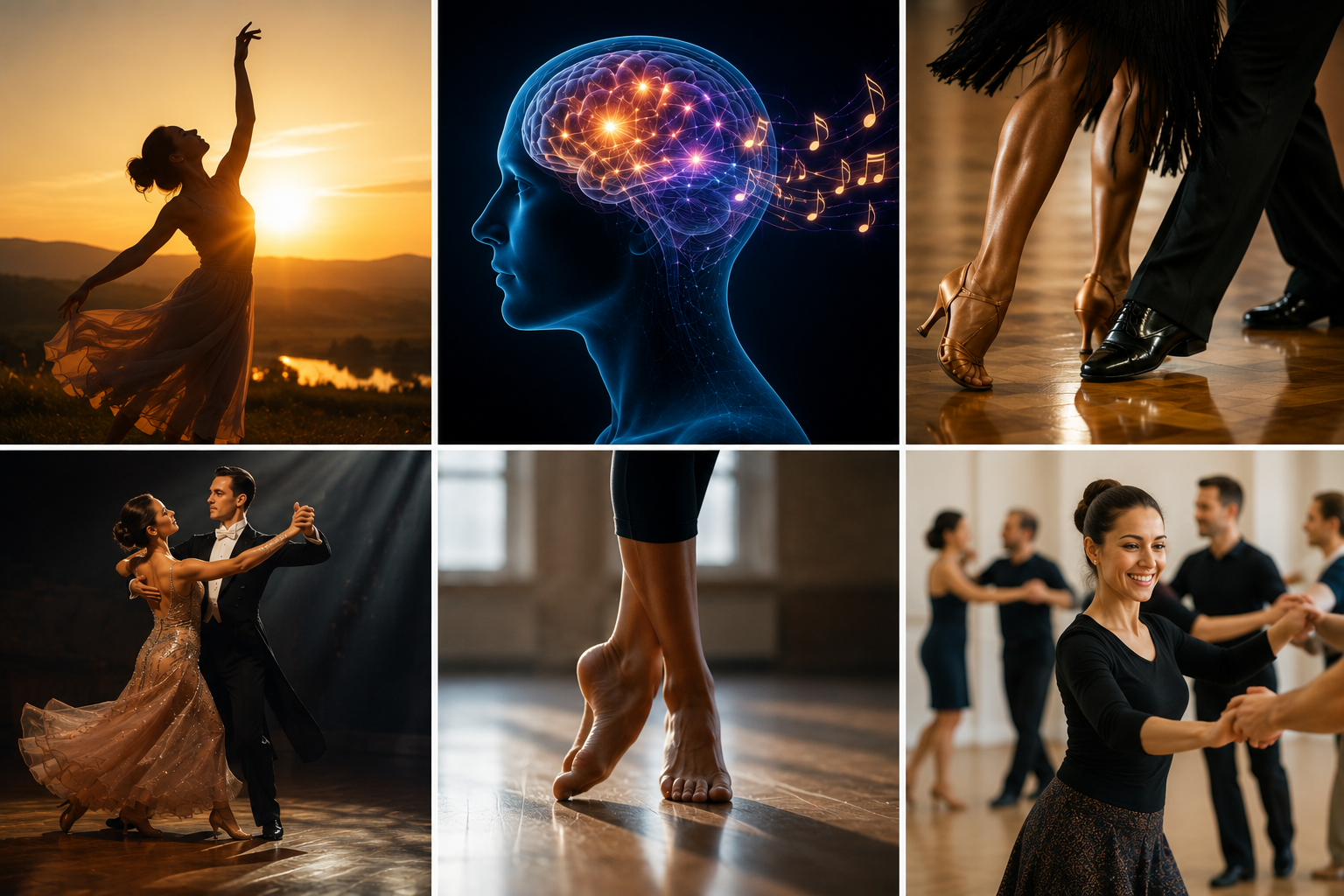
Have you ever noticed your foot tapping before you realized you were doing it? Or found yourself moving to a rhythm without making a deliberate decision?
That response is not entirely conscious. The human brain is highly responsive to rhythm.
When music begins, areas involved in movement, memory, emotion, attention, and prediction can become active almost simultaneously. The brain begins anticipating patterns, organizing timing, and preparing the body to respond.
By the time you consciously decide to move, your nervous system may already be getting ready.
Dance may not simply be an activity humans invented. It may also be a natural extension of how the brain processes sound, rhythm, emotion, and movement.
Why dancing feels different from other exercise
Running develops endurance. Strength training builds muscle. Dance asks the brain and body to manage many different tasks at the same time.
Listen to the rhythm.
Remember the sequence.
Maintain balance.
Adjust your movement.
Respond to your partner.
Express the character of the music.
Dance combines physical effort with memory, timing, coordination, attention, and emotional expression. Instead of isolating one ability, it requires several systems to work together.
That is one reason dancing can feel less like traditional exercise and more like a continuous conversation between the brain and the body.
Why stress struggles to survive on the dance floor
Stress often feeds on repetition: the same worry, the same conversation, or the same imagined outcome replaying in the mind.
Dance interrupts that cycle.
Your attention is redirected toward something immediate:
Where is the beat?
What comes next?
Am I leading or following?
How should this movement feel?
This shift from rumination to real-time attention can create a sense of mental relief. Music, movement, coordination, and social interaction may also support mood regulation and help the body move out of a prolonged stress response.
That may explain why so many people leave a dance lesson saying:
“For a while, I forgot about everything else.”
Why ballroom dance is different from almost anything else
Many forms of exercise can be performed alone. Ballroom dance is built around another person.
Every movement depends on communication, timing, trust, and awareness. Partners learn to respond to subtle changes in posture, direction, pressure, and rhythm, often without saying a word.
Research into synchronized movement suggests that moving in time with another person may support cooperation, empathy, and a stronger sense of connection.
That may be one reason partner dancing has survived across generations and cultures.
Ballroom dance does not only teach people how to move.
It teaches them how to listen, respond, adapt, and connect.
Dance was never only about the steps
Most people enter a dance class expecting to learn patterns, technique, or choreography.
And they do.
But many leave with something they did not expect: improved posture, steadier breathing, sharper focus, greater confidence, and more comfort in their own body.
Long before neuroscience used terms such as motor learning, neural coordination, or reward pathways, people already understood something important:
Dance changes how you experience yourself, not only how you move.
Science did not create that truth. It is simply giving us clearer language for something humans have understood for generations.
Final thought
Dance has survived changing cultures, traditions, and centuries because it fulfills something deeply human.
Not simply the need to exercise.
Not simply the desire to perform.
But the need to feel rhythm, express emotion, move with others, and experience connection.
Music, movement, and human connection have always belonged together.
Thousands of years later, we are still discovering why—one dance floor at a time.