

Our Dance Programs
IN THIS LESSON
American Rhythm — What You’ll Learn
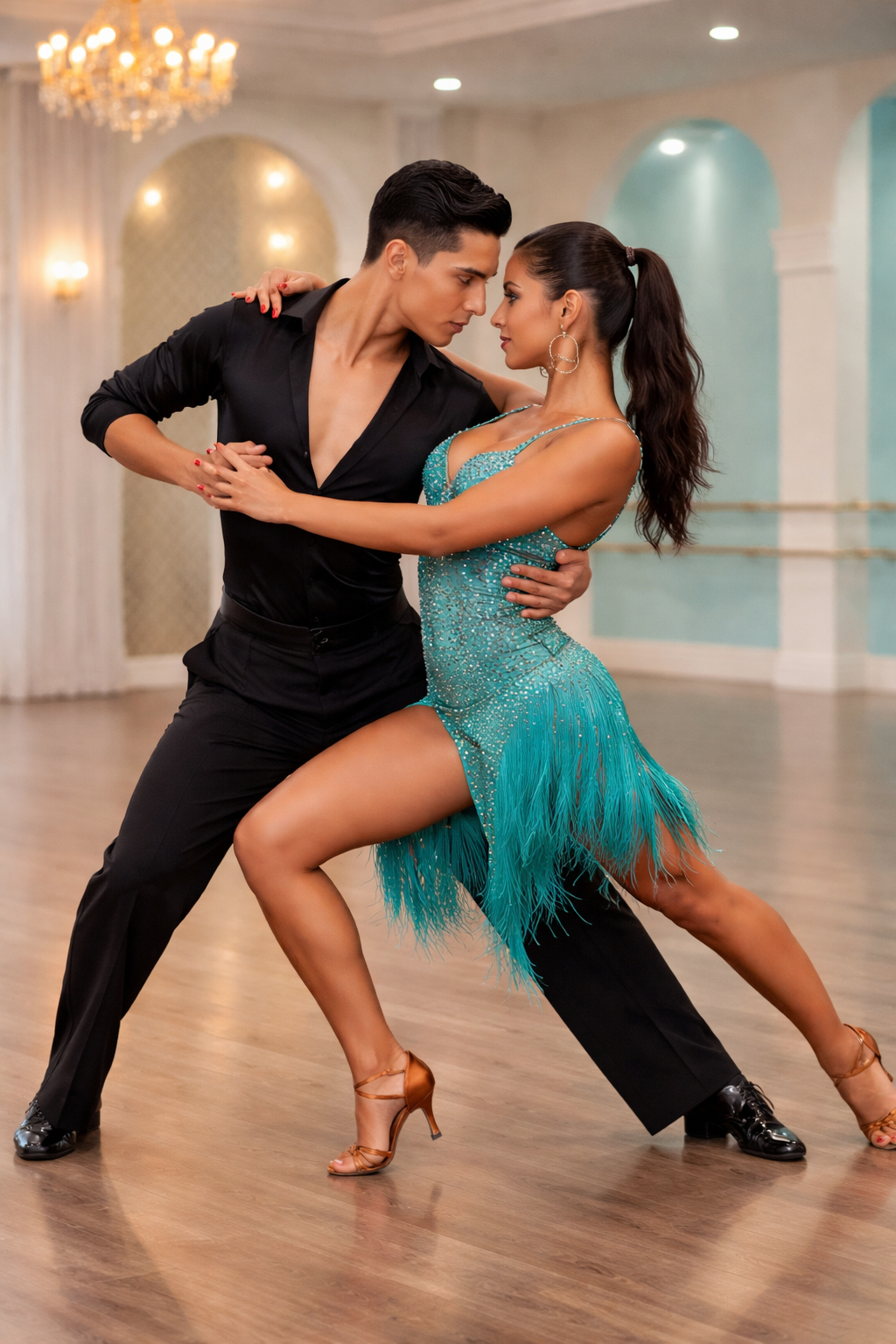
Energetic and expressive, American Rhythm introduces you to dances like Cha Cha, Rumba, Swing, Bolero, and Mambo.We’ll guide you through basic steps, timing, and how to use body movement and rhythm naturally. You’ll build confidence, coordination, and learn how to connect with your partner—all in a fun and engaging environment.
-
American Rhythm Cha Cha originated from Cuban dance traditions, particularly in Havana, where it developed from earlier styles like mambo in the mid-20th century. Its name comes from the distinct triple-step rhythm that gives the dance its playful and syncopated character.
As Cha Cha spread to the United States, it was adapted into the American Rhythm style, becoming more structured while still maintaining its lively, expressive feel. This version emphasizes clear timing, compact steps, and the freedom to dance in both closed and open positions.
Today, American Rhythm Cha Cha is known for its sharp footwork, rhythmic energy, and fun, flirtatious style—making it a favorite for both social dancing and ballroom training.
-
American Rhythm Rumba has its roots in Afro-Cuban dance traditions, originating in Havana. It evolved from earlier Cuban rhythms and was later influenced by the bolero, giving it a slower, more romantic character.
As the dance was introduced to the United States, it was adapted into the American Rhythm style, focusing on expressive movement, clear timing, and a strong connection between partners. Compared to its international counterpart, American Rumba allows more freedom with open figures and storytelling.
Today, it is known as the “dance of love,” characterized by smooth motion, controlled rhythm, and emotional expression—making it both elegant and deeply engaging to dance.
-
East Coast Swing developed in the United States during the 1930s and 1940s, evolving from the lively Lindy Hop popular in places like Savoy Ballroom. It was simplified to create a more accessible version of swing that could be easily learned and danced socially.
As it became part of the American Rhythm ballroom category, East Coast Swing was further refined with structured timing and basic patterns, while keeping its energetic and playful character.
Today, it is a fun, upbeat dance known for its bounce, rhythm, and versatility—perfect for social dancing to a wide range of music styles.
-
American Rhythm Bolero was developed in the United States by blending the romantic Cuban bolero style with movement influences from European dances such as waltz and ballet. This combination introduced smooth rise and fall, shaping, and continuous motion into the dance, creating a unique ballroom style.
Today, Bolero is known for its soft, flowing character, expressive movement, and strong emotional connection between partners
-
American Rhythm Mambo is one of the most exciting and rhythm-driven dances in ballroom, born from Afro-Cuban music and brought to life in the vibrant dance scene of New York City during the 1940s and 1950s. It quickly became a sensation in clubs and ballrooms, known for its bold energy and irresistible rhythm.
As it evolved in the United States, mambo was refined into the American Rhythm style, adding structure while keeping its sharp accents, syncopation, and dynamic partner interaction.
Today, mambo stands out for its intensity, musicality, and vibrant personality—making it a powerful and exhilarating dance to learn and perform