

Our Dance Programs
IN THIS LESSON
Social & Club Style -you can learn
Feel confident and comfortable dancing in real-life settings—whether it’s a party, wedding, or night out..
We focus on popular styles like Salsa, Bachata, Swing, and Hustle and more , teaching you easy-to-follow steps, how to lead or follow, and how to move naturally with the music. You’ll develop rhythm, coordination, and the ability to dance with different partners in a relaxed, social environment.
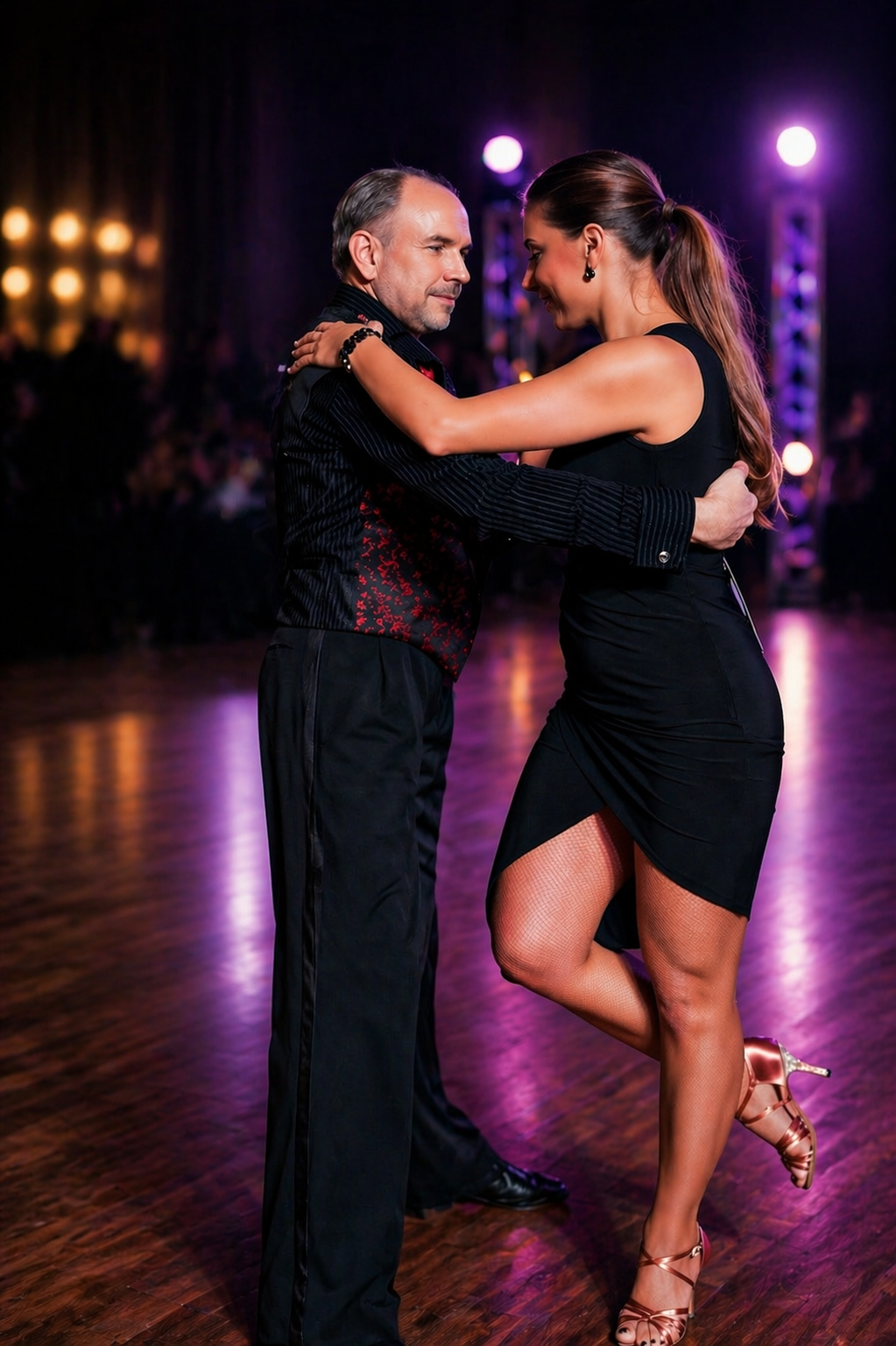
-
Salsa is a vibrant social dance with roots in Cuban and Puerto Rican music traditions, evolving from earlier styles such as Son Cubano, Mambo, and Afro-Caribbean rhythms. As these sounds traveled through the Caribbean, they carried a rich cultural blend of African and Spanish influences.
In the mid-20th century, Salsa found a new identity in New York City, where musicians and dancers from Latin communities refined and popularized the style. It was here that Salsa grew into an international phenomenon, shaped by both social dance culture and performance.
Today, Salsa includes several distinct styles such as Cuban (Casino), LA Style (On1), New York Style (On2), and Colombian (Cali)—each reflecting the culture and rhythm of the place it developed, while maintaining the essence of connection, timing, and musical expression.
-
Bachata originated in the Dominican Republic in the early 20th century, developing from a blend of bolero, son, and traditional guitar-based music. In its early years, it was often associated with intimate gatherings and everyday life, expressing themes of romance, heartbreak, and storytelling.
For decades, Bachata remained a local style before gradually gaining recognition and evolving in both music and dance. As it spread internationally, it transformed from its original, footwork-driven form into a variety of modern interpretations.
Today, Bachata includes styles such as Dominican, Modern, Sensual, and Urban/Fusion, each offering a different approach to movement, connection, and musicality—while still preserving the emotional and cultural roots that define the dance.
-
Hustle emerged in New York City during the 1970s, at the height of the disco era. In crowded nightclubs, dancers began adapting partner movements to match the fast-paced, rhythmic beats of disco music, creating a style that was both smooth and energetic.
Initially more freestyle in nature, Hustle quickly gained popularity and began to develop a more structured form. Its rise was closely tied to the cultural impact of disco, especially through media and film, which helped bring the dance into the mainstream.
Over time, Hustle evolved into what is now known as New York Hustle, characterized by its linear, slot-based movement, continuous turns, and fluid connection between partners. While its roots remain in disco, Hustle has continued to adapt and is now danced to a wide range of modern music.
-
Merengue originated in the Dominican Republic in the 19th century and is one of the country’s most recognized cultural dances. It developed from a blend of African rhythms, European influences, and local traditions, reflecting the diverse history of the region.
Known for its simple, continuous marching rhythm, Merengue quickly became a popular social dance because of its accessibility and lively character. In the 20th century, it gained national importance and spread internationally, evolving in both music and dance while maintaining its core identity.
Today, Merengue is danced in various forms, including Dominican (traditional) and Ballroom Merengue, each preserving the signature rhythm and partner connection that make it energetic, social, and easy to enjoy worldwide.
-
Kizomba originated in Angola in the late 20th century, evolving from traditional Angolan dance styles such as Semba, combined with influences from Caribbean rhythms like Zouk. The name “Kizomba” comes from the Kimbundu language, meaning party or celebration.
Developed alongside its music, Kizomba became known for its slow, rhythmic timing and close partner connection, emphasizing smooth movement and subtle lead-and-follow communication. As it spread from Africa to Europe, particularly Portugal and France, the dance continued to evolve and gained international popularity.
Today, Kizomba includes variations such as Traditional Kizomba, Urban Kiz, and Tarraxinha, each offering a different approach to movement, musicality, and interpretation, while maintaining the grounded, connected style that defines the dance.
-
Country Two-Step developed in the United States, particularly in the Texas dance hall scene, where it evolved from earlier partner dances such as the Foxtrot and traditional Western social dances. As country and western music grew in popularity, dancers adapted these influences into a smooth, traveling partner style that matched the rhythm and storytelling of the music.
Known for its progressive movement around the floor, Country Two-Step became a staple of honky-tonks and social dance venues, valued for its relaxed feel and strong partner connection. Over time, it has remained a core dance within country western culture while also being taught in studios and social settings across the country.
Today, Country Two-Step is recognized for its flowing patterns, continuous motion, and balance between structure and improvisation, making it both accessible and versatile for social dancing.
-
West Coast Swing originated in the United States, evolving from Lindy Hop in the 1930s and 1940s. As swing dancing moved west, dancers adapted the style to fit smaller dance spaces and a smoother, more controlled aesthetic, leading to the development of a linear, slot-based dance.
Over time, West Coast Swing continued to evolve alongside music, transitioning from traditional swing into blues, rhythm & blues, and contemporary styles. This adaptability became one of its defining characteristics, allowing the dance to remain relevant across generations.
Today, West Coast Swing is known for its elastic connection, smooth flow, and high level of improvisation, giving dancers the freedom to interpret a wide range of music while maintaining a strong partner dynamic.
-
Argentine Tango originated in the late 19th century in Buenos Aires, Argentina, developing in the working-class neighborhoods and port areas where diverse cultures met. Influenced by African rhythms, European music, and local traditions, Tango grew as a deeply expressive and improvisational partner dance.
In its early years, Tango was an intimate social dance, focused on connection, musical interpretation, and subtle communication between partners. By the early 20th century, it spread to Europe, especially Paris, where it gained international recognition and refinement before returning to Argentina with renewed prestige.
Over time, Argentine Tango evolved into several styles, including Salon, Milonguero, and Nuevo Tango, each reflecting different approaches to movement, embrace, and musicality. Despite these variations, Tango remains defined by its close connection, improvisation, and emotional depth, making it one of the most distinctive and expressive partner dances in the world.
-
Nightclub Two-Step was developed in the United States in the 1960s by Buddy Schwimmer, created as a partner dance that could fit slower, romantic music commonly played in clubs at the time. Drawing from elements of Foxtrot and other smooth dances, it was designed to be simple, fluid, and accessible.
Unlike traveling dances, Nightclub Two-Step is typically danced in place with soft, continuous movement, making it ideal for smaller dance floors and intimate settings. Its smooth timing and relaxed structure allow dancers to focus on connection, balance, and musical expression.
Today, Nightclub Two-Step is widely used for social dancing and special occasions, especially to contemporary ballads and slower music, valued for its elegance, versatility, and ease of learning.