

Our Dance Programs
IN THIS LESSON
Beginner American Smooth — What You’ll Learn
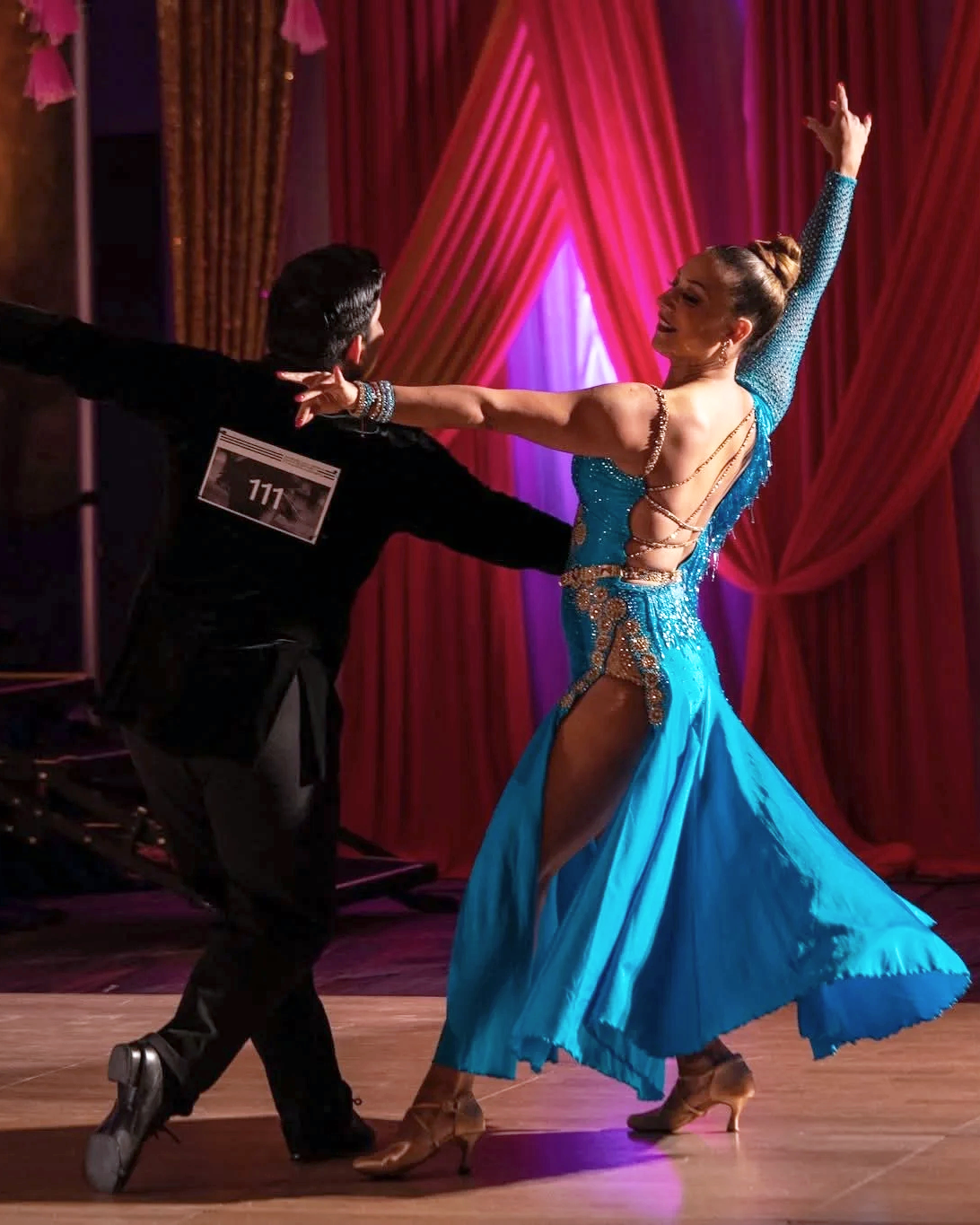
Designed to bring elegance and flow to the dance floor, American Smooth introduces dances such as Waltz ,Foxtrot, Tango, and Viennese Waltz. a welcoming and supportive environment.
We’ll guide you step by step through the fundamentals—basic patterns, posture, frame, and timing—so you feel comfortable and confident from your very first class. You’ll also learn how to dance in both closed and open positions, giving you the freedom to move naturally and connect with your partner.
Whether you’re completely new or looking to refine your basics, this class will help you build confidence, coordination, and a smooth, polished style on the dance floor.
-
American Smooth Waltz traces its roots to the European waltz, which became popular in Austria and Germany in the late 18th century. By the 19th century, waltz had spread across Europe and into formal ballrooms, becoming one of the most influential social dances of its time. In the United States, ballroom teachers and studios later adapted the traditional waltz into what became American Style, allowing more freedom of movement and open choreography. From that development came American Smooth Waltz—a style that kept the romance and flowing rise and fall of classic waltz while adding the expressive, theatrical qualities that define American ballroom.
-
American Smooth Tango is a theatrical and expressive branch of ballroom tango that developed in the United States during the early 20th century. It evolved from the original Argentine tango, which originated in Buenos Aires, blending its dramatic character with the elegance and structure of ballroom dance.
As tango spread to North America and Europe, it was adapted for social dancing and performance. In the U.S., this led to the creation of the American Smooth style, where dancers are not restricted to a closed hold. Instead, they can open up, separate, and incorporate turns, lines, and expressive movements—giving the dance a more cinematic and storytelling quality.
Influenced by Hollywood’s golden era—especially dancers like Fred Astaire and Ginger Rogers—American Smooth Tango emphasizes drama, fluidity, and artistic freedom, while still maintaining the sharp, staccato character of tango.
Today, it is a key part of the American Smooth ballroom category, valued for its blend of precision, creativity, and emotional expression.
-
American Smooth Foxtrot is one of the most elegant and flowing ballroom dances, developed in the United States in the early 20th century. It originated from social dances influenced by ragtime and jazz music, and is widely associated with performer Harry Fox, whose name is believed to have inspired the term “foxtrot.”
As the dance evolved, it became a staple of American ballroom culture, particularly during the rise of big band music. In the American Smooth style, foxtrot expanded beyond the traditional closed ballroom hold, allowing dancers to separate, turn, and express musical phrasing with greater freedom and creativity.
Hollywood played a significant role in shaping its style and popularity, with iconic performers like Fred Astaire and Ginger Rogers showcasing its smooth, continuous movement and effortless elegance on screen.
Today, American Smooth Foxtrot is known for its gliding steps, sophisticated timing, and expressive versatility—making it a cornerstone of ballroom dance that combines technique with refined artistry.
-
American Smooth Viennese Waltz is a fast, rotational ballroom dance that traces its origins to 18th-century Europe, particularly in Vienna. It evolved from early folk dances and became widely popular in aristocratic ballrooms, admired for its continuous turning motion and lively tempo.
As the dance spread internationally, it was adapted into different ballroom styles. In the United States, it became part of the American Smooth category, where the traditional closed hold is expanded to include open movements, underarm turns, and expressive shaping. This allows dancers greater artistic freedom while maintaining the signature rotary motion of the dance.
Influenced by stage and film, including performances by Fred Astaire, the American Smooth Viennese Waltz emphasizes both speed and elegance, blending classic technique with visual storytelling.
Today, it remains a dynamic and graceful dance, defined by its continuous flow, sweeping rotations, and the balance between tradition and creative expression.