

Our Dance Programs
IN THIS LESSON
International Latin -explorer style
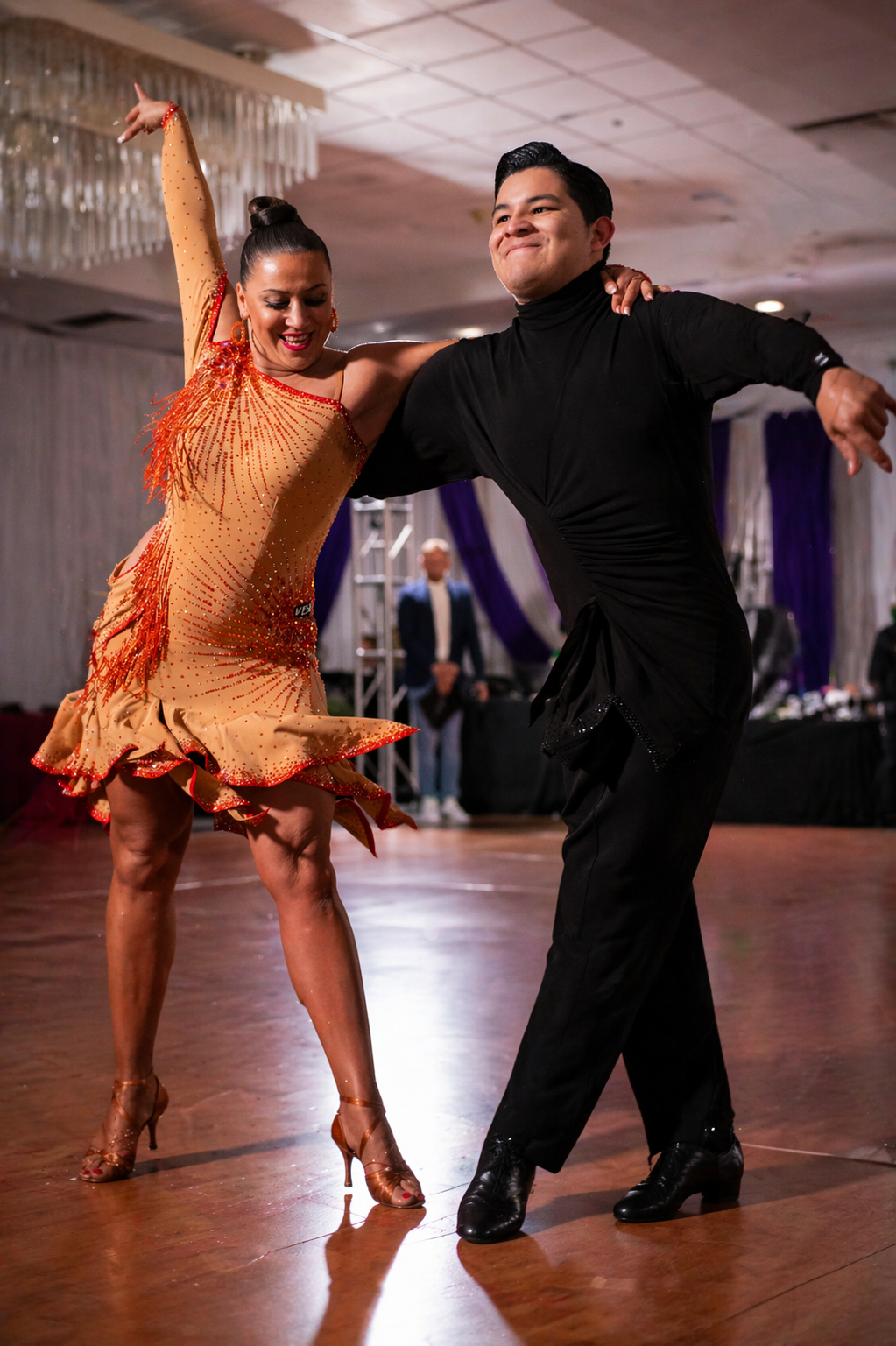
International Latin classes, you’ll learn how to dance with rhythm, energy, and expressive movement.
We focus on dances like Cha Cha, Samba, Rumba, Paso Doble, and Jive, teaching you body action, footwork, and musicality. You’ll develop coordination, timing, and dynamic styling, along with strong lead and follow skills for confident, powerful dancing.
-
The Cha Cha originated in the 1950s in Cuba, evolving from earlier Cuban dances such as the mambo. As music developed, dancers began adding a small triple step—creating the distinctive “cha-cha-cha” rhythm that gives the dance its name.
When Cha Cha spread internationally, it was refined and standardized, becoming one of the core dances in the International Latin style. Organizations like the Imperial Society of Teachers of Dancing helped shape its technique, timing, and syllabus for competitive dancing.
The International Latin Cha Cha is known for its:
Sharp, rhythmic footwork
Distinctive “2, 3, cha-cha-cha” timing
Strong Cuban motion through the hips
Playful, expressive character with precise control
Unlike social or club styles, the International version emphasizes clean technique, body action, and exact timing, creating a balance between fun, flirtatious energy and disciplined execution.
Today, Cha Cha is one of the most popular Latin dances worldwide—lively, energetic, and full of personality, making it a favorite in both social dancing and competition.
-
The Samba originated in Brazil, deeply rooted in African rhythms brought to South America and later shaped by Brazilian culture and music. It became widely recognized through festivals like Carnival, where its energetic and rhythmic style became a symbol of celebration and national identity.
As Samba was introduced to the ballroom world, it was adapted and refined into a partner dance suitable for competition. In the early 20th century, it was standardized by organizations such as the Imperial Society of Teachers of Dancing, becoming part of the International Latin syllabus.
The International Latin Samba maintains its vibrant character while introducing structured technique and partner connection. It is known for:
Distinctive bounce action created through the knees and ankles
Rhythmic, syncopated timing
Grounded yet lively movement
Strong emphasis on body rhythm and coordination
Unlike the more free-form Brazilian Samba styles, the International version is danced in a controlled framework, blending authentic rhythm with ballroom precision.
Today, Samba stands out as one of the most energetic Latin dances—dynamic, expressive, and full of life—bringing a sense of celebration and excitement to the dance floor.
-
The Rumba originated in Cuba, rooted in Afro-Cuban rhythms and expressive partner dancing. It evolved from traditional Cuban dances and music, where rhythm, connection, and storytelling played a central role.
As Rumba spread internationally, it was refined and adapted into a ballroom style. In England, it was standardized by organizations such as the Imperial Society of Teachers of Dancing, shaping the technique and timing used in International Latin Rumba today.
Often called the “dance of love,” Rumba is the slowest of the Latin dances and focuses on:
Controlled, precise movement
Strong Cuban motion and hip action
Expressive timing (2, 3, 4, 1)
Deep connection and communication between partners
Unlike faster Latin dances, Rumba emphasizes patience, balance, and emotional expression. Every step is intentional, allowing dancers to develop control, musicality, and presence.
Today, International Rumba is known for its elegance and emotional depth, making it one of the most powerful and expressive dances in the Latin ballroom style.
-
The Paso Doble is inspired by the drama and intensity of Spanish bullfighting traditions, with strong cultural roots in Spain. The dance reflects the atmosphere of the arena, where movement, music, and character come together to tell a powerful story.
As it entered the ballroom world, Paso Doble was structured and standardized by organizations such as the Imperial Society of Teachers of Dancing, becoming one of the five core dances in the International Latin style.
Unlike other Latin dances, Paso Doble is not primarily about rhythm or partner connection—it is about presentation and character. Traditionally, the lead represents the matador, while the partner can represent the cape, the arena, or other elements of the performance.
The International Paso Doble is defined by:
Strong, precise, and grounded movements
Sharp shaping and dramatic lines
Powerful posture and controlled footwork
Musical interpretation tied closely to the structure of the music
Rather than soft or fluid motion, Paso Doble emphasizes strength, pride, and intensity, creating a bold and theatrical presence on the dance floor.
Today, it stands out as one of the most dramatic dances in ballroom—commanding, expressive, and full of character.
-
The Jive originated in the early 20th century in the United States, influenced by African-American swing dances such as the Lindy Hop and Jitterbug. It developed alongside jazz music, bringing a lively, upbeat energy to social dance floors.
As Jive was introduced to Europe, it was refined and adapted into a more structured form suitable for ballroom. By the mid-20th century, it was standardized by organizations such as the Imperial Society of Teachers of Dancing, becoming the fastest and most energetic dance in the International Latin style.
The International Jive is known for:
Fast, upbeat music and high energy
Light, springy footwork with bounce action
Kick and flick actions
Clear rhythm with a strong emphasis on timing and precision
Unlike its social dance origins, the ballroom version is more controlled and technically demanding, requiring stamina, coordination, and sharp execution.
Today, Jive brings a playful and exciting finish to the Latin dances—full of rhythm, personality, and infectious energy.